

30 Years of NDE Research: an interview with Raymond Moody
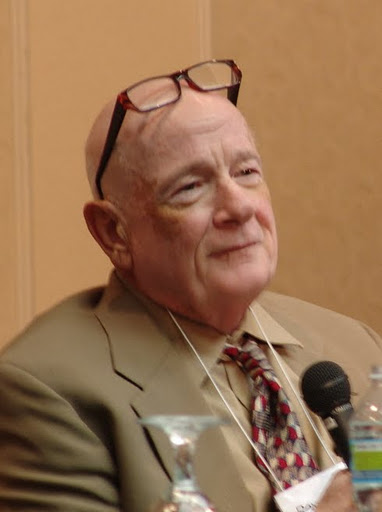
What do you recall about those early meetings that led to the founding of IANDS?
My friend John Audette was the conceiver, originator, organizer and founder of IANDS. I met John in February of 1974, when he asked me to lecture on my work to the Sociology Club at Augusta College in Georgia. Due to his organizing skills, the auditorium was packed for my lecture. He was obviously touched by my report, and we became good friends. Several years later, he had the idea of forming the group which became IANDS. He asked me to endorse his project, which I did.
John traveled around the country on his own initiative. He met the various medical doctors and psychologists who were then waking up to the extent of this amazing phenomenon we call the near-death experience. He arranged for us to all get together in Charlottesville, Virginia, where I lived. My remembrance is that the founding of the group was in November of 1977 or 1978. We met in a room at the Baptist Student Center in Charlottesville. Present at the initial meeting were John Audette, Ken Ring, Mike Sabom, Sarah Kreutziger, Beverly Belk, Bruce Greyson, John Egle, my wife Louise, and myself. There was also a psychology professor, whose name I forget. He didn't seem to enjoy our company, and kept dozing off. He decided not to stay with us after that. There may have been other attendees, as well. I just don't remember. We spent the day conceptualizing. I made it clear from the beginning that I didn't want any sort of organizing, administrative, or leadership role in the group. I am not a joiner or social person, and I like to work by myself. That day I just sat there, rocking in my rocking chair, contributing some ideas and telling stories about my imaginary town.
So make no mistake about it: John Audette was the originator and founder of IANDS. For a long time he kept the organization going on his own determination and resources. Later on there was a meeting at my farm in Highland County, Virginia. That came about as a reunion of the original participants. The organization had already been running for a while when we met at the farm.
I cannot really say how the organization is different today from how I envisioned it then. To tell the truth, I don't think I envisioned it in any particular way at all, even then. I was happy then and still am — that people would spend time promoting interest in this inherently fascinating dimension of human experience.
What do you find most interesting in the field of NDE studies? How have your family and friends reacted to your interest in this field? How have you integrated what you have learned from NDEs into your religious views, your scientific views, your view of reality?
To me the most fascinating aspect of these experiences is their potential bearing on the biggest question of human existence: Is there an afterlife? I was not exposed to religion as a child, and the first I ever thought about life after death was in reading Plato as a first-year college student. As I said at the beginning of Life After Life, my background interests were in logic, philosophy of language, and ancient Greek philosophy. I also emphasized near the beginning that I was primarily discussing narratives, or verbal accounts. And I emphasized that these narratives were not "evidence," especially not "scientific" evidence of an afterlife. Regrettably, all those vital facts got overlooked in the enormous wave of popular and professional interest in these experiences that swept the world after Life After Life was published in 1975. The afterlife remains the most important philosophical question. But it is not yet a scientific question. I have kept insisting on this, because it is a truly crucial point. Thus far, the question of an afterlife is still a conceptual question. That is, it requires logical reasoning about concepts, not scientific methods. I believe that people will be waking up to this pretty soon and it will transform the landscape of rational study of life after death.
30 Years of NDE Research: an interview with Ken Ring
 When and why did you cease doing work on NDEs?
I wrote my last substantial article on NDEs, and gave my last public talk on the subject, in 2000. By that time, I had been studying, writing about, and lecturing on NDEs for 23 years; I was approaching 65, and felt that it was time for me to hang up my NDE spikes, as it were, and move on to other things.
It wasn't just that I felt I had had my chance to have my say, but there was something else that prompted this decision — although I know this might sound to some like a mere rationalization, or maybe even a self-serving delusion! But anyway, for a long time I had felt myself to be in service to the Light, and tried to conduct my work in this spirit. However, as the end of the millennium approached, I had the distinct inner sense that I was somehow being "released" from my contract and, to make a bit of a joke about it, was given the equivalent of "a golden handshake."
Of course, I don't mean to give myself airs — I just felt that it was time for me to go. But I would never want people to think I ever lost my interest in NDEs, simply because I no longer want to be actively involved in the field. On the contrary, to this day I have maintained contacts with some of my colleagues and some of my NDEr friends, and I have continued to try to help researchers, students and others in their work, and NDErs, too – just in a more private, and more-or-less publicly invisible capacity. I would like people who still remember me to know that I will always regard my work in the field of near-death studies as the blessing of my life, and as the greatest privilege I have ever been granted.
What was your relationship to IANDS and how do you feel about it now?
I guess I am one of the lucky ones who "was there at the beginning." IANDS was effectively born at the University of Connecticut in December, 1980, and was incorporated officially on February 19, 1981. Its co-founders were Bruce Greyson, John Audette and myself. And in the beginning, it was a purely volunteer organization, mostly run by some of my students. With their help and with the help of many others who soon came on board, I was able to oversee its functioning during its early years, but my formal association with IANDS ended in 1983. After that time, Nancy Evans Bush took over the management of the organization and she, perhaps more than anyone else in its history, deserves the credit for steering it through some very perilous years. Of course, there were many others over the years who played an important part in the IANDS story, and from a professional standpoint, the single most significant person for the long haul has been Bruce Greyson, who, as everyone will know, was the longtime editor of our journal and the director of IANDS' research operations.
Naturally, it is very gratifying to know that IANDS has not only survived but flourished for the last three decades, and that during that time there have been many branches in other countries as well (even though not all of them are extant). In my day, I was fortunate to visit or address quite a few of these groups, as well as to participate in a number of IANDS national conferences here. But, really, after having helped midwife IANDS into this world, I had very little to do with its growth and can claim no credit for that – that rightly belongs to so many others.
So if there's life after IANDS and NDEs, what have you been up to in recent years?
Well, I left the University of Connecticut in December, 1996, when I was 61, and moved back to the Bay Area in California, where I had grown up. After writing the last of my NDE books, I have continued to work and write – just on other subjects. For example, I wrote a couple of books on some composers of classical music – Saint- Saëns, Janacek, Tchaikovsky, and Elgar – and penned a few privately printed memoirs. A few years ago, I got interested and then involved in the Palestinian/Israeli conflict, went to the West Bank, and eventually wrote a book about the lives of contemporary Palestinians, entitled Letters from Palestine. At this point, having recently completed three-quarters of a century on this planet, and having just finished another memoir, I think I am finally done writing books! From now on, I just hope to continue reading them, but one never knows what's around the corner. Still, sometimes it's enjoyable to look back on my life and see that I was a part of something, namely IANDS, that has helped to bring about a new and comforting understanding of death, which in turn has helped many to fear it less, and to learn the importance of living with love for all things, including the privilege of life itself.
30 Years of NDE Research: an interview with Bruce Greyson
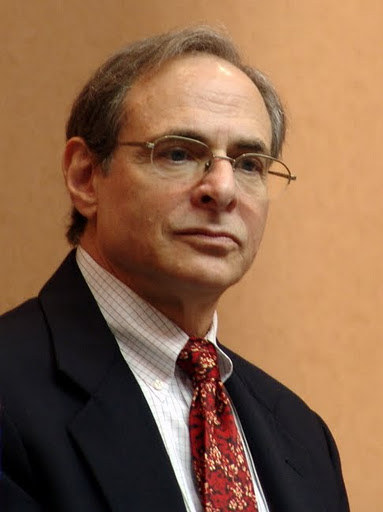 What do you recall about those early meetings that led to the founding of IANDS?
Rather than trying to repeat all the details about the origins of IANDS, I will give you my impressions. After Raymond Moody published his groundbreaking Life After Life, he was contacted by a number of clinicians and researchers interested in learning more about near-death experiences. Rather than dialogue with each of them individually, Raymond and John Audette decided to gather them all together to form a research network. My hope going into that weekend meeting at Moody's farm 34 years ago was that this group of clinicians and researchers would jointly launch a multi-center study of NDEs, using the same data collection instruments and roughly the same research techniques.
What actually happened was both less and more than I had anticipated. The "less" part was that the diverse group of clinicians and researchers, some of whom were also experiencers, did not agree on a basic definition of what an NDE is, let alone on a uniform data collection instrument or research technique. The "more" part was that the organization that grew out of that meeting was far greater than simply a research network. It did bring together researchers who could offer each other the mutual advice and support that we could not find working in isolation in our individual institutions, but it also became obvious that there were other, perhaps more important, missions for the group. One wasto provide information, support, and resources for the near-death experiencers themselves; a second, related mission was to provide information and resources to health care workers and the general public about NDEs and related experiences.
Although Raymond was the guiding presence behind the group, he had little interest in running an organization. That he turned over to John, who often seemed to function as Raymond's left brain in those days. Ken Ring, Mike Sabom, and I joined John as officers of the fledgling organization. Though I served stints as President and Research Director of IANDS, I think my most important role within the organization was as editor of the Journal of Near-Death Studies, from 1981 to 2008. The journal played a vital role in providing a respectable, peer-reviewed vehicle for people to publish their findings and ideas about NDEs in the decades before mainstream journals would show an interest in the topic, and I think it helped NDEs become a legitimate topic for discussion among clinicians and scientists.
One aspect of IANDS that has surprised and gratified me has been the diversity of its members, its leaders, and its activities. In addition to functioning as a resource for near-death researchers, it has grown into a worldwide support network for experiencers, and an educational resource for the public and the media through its local Friends of IANDS chapters, its annual conferences, and its sophisticated internet presence.
What do you find most interesting in the field of NDE studies? How have your family and friends reacted to your interest in this field? How have you integrated what you have learned from NDEs into your religious views, your scientific views, your view of reality?
The founders of what became IANDS were a heterogeneous group — not only in their backgrounds but also in their reasons for interest in NDEs. Some of them, such as John Audette, a medical sociologist, and Ken Ring, a social psychologist, focused on the "big picture" of the ultimate meaning of NDEs. They looked toward how NDEs and knowledge from them and about them could transform human society — and indeed, human evolution — by promoting the spiritual growth of our species, if not our planet.
As a clinical psychiatrist, my focus was more limited, concentrating on the role NDEs play or could play in transforming the individual experiencers. While I am intrigued by the broader questions of the spiritual evolution of humanity and what NDEs imply about the relationship between brain, mind, and spirit, those questions make my head spin. I feel more at home – and more useful – in working with individuals trying to integrate their NDE and its lessons into their daily lives. So as fascinating as NDEs themselves may be, I have been most interested in the aftereffects and lookingat how experiencers' attitudes, beliefs, and values change following their NDEs – and how they and their loved ones deal with those changes.
My fairly stable track record prior to becoming interested in NDEs I think encouraged those who knew me to take a more open-minded approach to the topic and to take it seriously. Likewise, the reaction among my medical colleagues has been reasonably positive. Unlike some of the basic sciences, medical science is a very practical, results-oriented pursuit. Because I have focused my research on documented aftereffects that have important consequences for patient care, such as the role of NDEs in people's attitudes toward suicide or bereavement or their anxiety about dying, my colleagues have shown interest in learning whatever they can about NDEs that might help them become better caregivers.
Studying NDEs for the past 35 years – and spending so much time with experiencers themselves – has transformed my own views of religion, of science, and of reality, and helped me outgrow many of the simplistic assumptions of my religious background and my scientific training. I can't say that it's given me answers to the "big" questions about spirituality and its relationship to our mundane world, but it's made me very comfortable with not having answers.
Thinking about your deepest hopes for IANDS - what turned out better than you'd hoped? What surprised you? What disappointed you? What might you have done differently? What would you like to see happen in the future?
I have been surprised at some of the ways IANDS has developed over the decades – indeed, I am surprised that it has survived for 30 years! I am surprised that IANDS has blossomed into such an international network of support for experiencers, and an educational resource for experiencers, families, clinicians, and the media. And I am surprised that after more than three decades of research, we still have barely scratched the surface in terms of research into the phenomenon. But my immersion in NDEs – or maybe it's my age – has taught me not to waste time in disappointment. I've learned that my personal hopes for IANDS were not necessarily what was best for the organization, and I trust that the way IANDS has developed – and will continue to develop – is the way it should be. For that reason, I will not indulge in sharing my hopes for the future of IANDS. I leave that to the next generation.
The Founding of IANDS and the Importance of NDE Research
By John R. Audette, M.S.
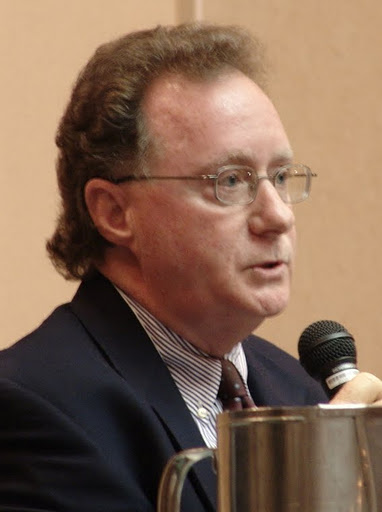 1. Before you, there was no IANDS. What were you hoping for when you went to that first weekend meeting at the Moody's farm? Tell us about that weekend - Who was there? What was the agenda? What happened? What was your role? How is the organization different now from what you envisioned then?
The first organizational meeting took place over a weekend in November 1977 at a Holiday Inn in Charlottesville, VA on Saturday and at the University of Virginia on Sunday, the next day. In attendance were Drs. Beverly Belk, Bruce Greyson, Sarah Kreutziger, Raymond Moody, Donald Mueller, Kenneth Ring, and Michael Sabom, as well as Mr. John Egle (publisher of Life After Life and owner of Mockingbird Books at the time), Gina Weiss, M.S., Sue Palmer, myself (John Audette) and a few other interested persons. A subsequent meeting took place at Dr. Moody's 500-acre farm in Headwaters, VA.
The agenda for this initial meeting was to formulate a plan to establish an international organization that would serve the interests and needs of individuals who reported having near-death experiences, as well as peak experiences generally, and the researchers who study them, and also to serve as a resource for the general public seeking credible information on the subject. The outcome of this meeting was the formation of the Association for the Scientific Study of Near-Death Phenomena. As far as I know, it was the first organization of its kind in the world devoted to these specific purposes.
Soon after this meeting, in early 1978, I relocated to Peoria, Illinois to teach at Illinois Central College and to work as health planner with the Illinois Central Health Systems Agency. Then, during the summer of 1978, the Association held its first board meeting at Washington University in St. Louis, MO. In attendance were Drs. Greyson, Ring and Sabom, as well as myself. At this meeting, bylaws were drafted, as well as articles of incorporation and the application for tax exempt status with the IRS, which was filed soon after and subsequently approved.
As for my role in this endeavor, for three and one half years (1978-1981), I oversaw the activities of the Association as its first Executive Director from my home in Peoria, Illinois. I created its first brochure, developed the initial membership, responded to numerous requests for information and published a quarterly newsletter. I also conceived and named the scholarly journal Anabiosis, which was initially edited by Dr. Ring for the first few issues, and then subsequently by Dr. Greyson.
In 1982, I relocated to West Palm Beach, Florida to direct Hospice of Palm Beach County. Due to my weighty responsibilities at hospice, I was no longer able to manage the Association as I had before. Dr. Ring, who was a member of the faculty at the University of Connecticut, Storrs, graciously offered to rise to the occasion. So in late 1981, I passed the baton to Dr. Ring and relocated the Association's operations to the University of Connecticut at Storrs. Shortly thereafter, Dr. Ring conceived a new name for the organization and its legal name was changed to The International Association for Near-Death Studies (IANDS). Under Dr. Ring's leadership, the board of directors was greatly expanded, the membership grew and IANDS generally flourished into the organization that exists today.
My greatest contribution in the creation of IANDS is that I originally conceived the idea for the association and organized the initial meetings that led to its formation. I also made a list of the researchers working in the field, or interested in doing so, and invited them by mail or telephone calls to join Dr. Moody and me at the first organizational meeting in November 1977 to explore the merits of forming an association of this kind. I convened and conducted the first organizational meeting. So, in this sense, I suppose it is fair to say that the Association was my brainchild. I think most fellow co-founders would agree, if not all. Although I originally conceived the association and served as the principal catalyst for its formation, it took shape through a process of collaboration and teamwork that spanned several months in late 1977 and early 1978. Thus the formal organization known today as IANDS was indeed co-founded and co-created by Drs. Greyson, Moody, Ring and Sabom and myself.
The history behind the evolution of the idea I conceived to create an association of this kind began in the spring of 1975. Back then, I introduced Dr. Raymond Moody, then a medical student at the Medical College of Georgia in Augusta, GA, to Dr. Elisabeth Kübler-Ross. This introduction took place at a community college in Georgia, near Atlanta, either Marietta or Kennesaw, where Dr. Kübler-Ross was speaking.
I considered this meeting to be historic. Dr. Kübler-Ross, at the time, had achieved great public recognition for her book On Death & Dying and for her efforts to spearhead the hospice movement in the U.S. and abroad. I had befriended her the year before and attended many of her workshops and lectures. She and Dr. Moody had much in common, including their mutual interest in near-death experiences. The two had exchanged correspondence prior to their meeting and had been in touch over the telephone, but I felt it was important for them to meet personally, and so I arranged for them to meet after her lecture that day.
Following this meeting, which occurred just prior to the publication of Life After Life. Dr. Kübler-Ross agreed to write the Foreword to Life After Life. In this Foreword, she congratulated Dr. Moody for having the courage to put his findings into print. She also commented that his work, and the near-death experience generally, are "proof of life after death". Dr. Moody himself never made this claim, but Dr. Kübler-Ross never had any doubt about it, nor any qualms about it. I loved her for that, among many other things. Indeed, it was her courage in the face of intense criticism from fellow medical doctors and clergy that spawned the whole death and dying revolution in America and elsewhere. She was one great and brave lady.
At her public lectures, Dr. Kübler-Ross often spoke about her encounters with people who reported near-death experiences to her. She said she had collected thousands of cases over many years of working with dying patients and in clinical encounters as a practicing psychiatrist. She spoke openly about her conviction that near-death experiences were powerful and could dramatically change socio-cultural perceptions of what it means to die and what happens afterwards. She often opined that current views about death and life after death were erroneous and could be profoundly reshaped based on findings from research into near-death experiences and related phenomena.
The insights offered by Dr. Kübler-Ross were inspiring to me. Her views resonated with me down to the deepest core of my being. Her words had an undeniable ring of truth and they motivated me to explore the potential for social change that exists within the near-death experience and related phenomena. I would often speak privately with her and Dr. Moody about this general interest of mine. As a sociologist by academic training, I could not think in any other terms but social change. The world was crying out for it, and it still is. From the outset of my involvement in this field, dating back to early 1974 when I first met Dr. Moody, I have always been and continue to be focused solely on the potential for socio-cultural change that lies within the NDE and related phenomena. I have often opined that within this body of knowledge lies great potential to bring about sweeping and profound socio-cultural change, and this is what interests me most about NDEs. Dr. Kübler-Ross shared this sentiment as well.
Soon after the publication of Life After Life, circa Fall 1975, Dr. Moody and I both relocated from Georgia to Virginia. Dr. Moody went to the University of Virginia in Charlottesville to complete his residency in psychiatry. I went to Virginia Tech in Blacksburg to earn a Master of Science degree in sociology. During this time, I helped facilitate the exchange of information between Dr. Moody and other scientists concerning their independent research efforts into NDEs. With the publication of Life After Life, Dr. Moody became an overnight celebrity. There was a virtual explosion of public interest in the subject.
Then in 1976, while Life After Life continued its reign on the best seller list, Dr. Moody published his second book, Reflections On Life After Life. He began to appear on numerous talk shows and also granted a number of media interviews. He also fielded a deluge of requests for personal appearances and speaking engagements. Letters and phone calls flooded the Moody residence from all over the world. I helped Dr. Moody manage what had become a truly overwhelming mountain of interest, including inquiries from other researchers who contacted him to ask questions and seek assistance in designing research efforts of their own. Also, near-death experiencers began to write in search of more information. Moreover, members of the clergy and the interested public began to contact Dr. Moody as well with questions, invitations to speak and so on.
Sensing the critical need and the opportunity to further my interest in applying findings from NDE research toward the lofty goal of advancing positive social change and transformation at the individual and collective level, I suggested to Dr. Moody that we should form an international association that would bring together researchers, experiencers and the general public in further pursuit of their common interest in NDEs. This occurred in late 1976 or early 1977 as I recall. Dr. Moody agreed that the idea had merit, and shortly after, the researchers known to Dr. Moody at the time were contacted and invited to the November 1977 meeting in Charlottesville to discuss the formation of an association that would further the scientific study of NDEs and that would also serve as a support group of sorts for experiencers, as well as a clearinghouse of information for the public at large.
My hope in creating the Association was to apply the power of the central messages and insights derived from the scientific study of NDEs to the goal of advancing positive social change. I felt then and still feel today that findings from research into NDEs and related phenomena could enable humankind to evolve from the dominant model of "every man for himself" to the more enlightened paradigm of "all for one and one for all." From the outset of my involvement with this subject matter, I have maintained that the scientific study of NDEs, by virtue of the conclusions independently reached by a number of different researchers, have enormous power to unify religions, races and cultures through the universal cornerstone insights which they provide, as follows:
1. We are all one. There is no duality. There is only universal oneness. Egocentrism is a problem of misperceiving true reality. Take away duality and with it would go greed, self-interest, violence, fear, competition and many other current conditions which do not serve the greater good or our collective best interests as a species.
2. There is survival of consciousness beyond death. Death is not the end of existence. We are eternal beings.
3. The purpose of life is to love each other and care for each other unconditionally and non-judgmentally, to grow intellectually, to cooperate and collaborate, to be happy...to celebrate life...have fun...enjoy!
4. There is a Supreme Being or Source or Creator who is all-knowing and non-judgmental and who is the perfect manifestation of pure unconditional love.
5. There is no reason to fear death for it is only a doorway to another level of existence which is beautiful and blissful beyond words. We all come from the same Source and we all return to the same Source. We are all one, truly, as NDEs teach us, which gives new credence to the Golden Rule.
6. We are responsible for what we say, what we think and what we do. In the presence of absolute love and knowledge, we will judge ourselves one day. We will learn that what we do to others, we do to ourselves, for we are all one. We will atone for whatever we do that is unloving and unkind. We will have no choice but to continue to repeat the birth/re-birth process until we learn to be pure vessels of unconditional love, caring and kindness.
7. The NDE teaches us many things, but clearly it teaches that we should live our lives not for the things of ego or the material world, but for the marvelous journey that begins when we leave the body, hence the need for every thinking person to reevaluate values and priorities while on earth. All we take with us is our record of deeds.
I have long felt that NDEs and related phenomena present a novel opportunity to link science and religion. When the message of NDEs is fully understood and comprehended by humanity, there is great potential to realize our most grandiose aspirations for "higher civilization" and for massive transformation in the nature of political, economic and social systems on a global level.
I am thrilled IANDS continues some 34 years after its founding. I hope one day it will evolve into the force for positive global change that I always thought and intuited it could be. God knows, the world would be better for it.
2. What puzzles you most about NDEs? What do you find most interesting in the field of NDE studies? How have your family and friends reacted to your interest in this field? How have you integrated what you have learned from NDEs into your religious views, your scientific views, your view of reality?
What puzzles me most about NDEs is why only a small percentage of people who lose consciousness during a close brush with death report an NDE. I am puzzled as to why some have NDEs and others do not, or at least do not remember having one. What interests me most about NDEs is the transformative effects reported by those who undergo such experiences and the significance of this by extension for the rest of humanity, who would do well to heed the central messages and insights derived from NDEs and related phenomena. Imagine how individual perceptions and values would change as a result. Imagine how the world would change. No more hunger, war, poverty, etc., for starters. Heaven on earth. Paradise and bliss realized.
My family and friends support my interest in this field, generally, and have mostly benefited from the knowledge I have shared with them about it. My work in this area enabled me to direct two hospice programs, and to offer comfort and support generally to family, friends and others who are facing their own transition.
When I began my involvement in this field in 1974, I was agnostic. I had no opinion about the existence of a Creator or survival of consciousness after physical death. I had been raised Catholic, but abandoned that religion and others I tried out subsequently sometime in my early twenties. My views then changed to what is described above after interviewing many experiencers and conducting my own prospective study at two medical centers in Peoria, Illinois, and examining the findings of other researchers, including those of Dr. Elisabeth Kübler-Ross.
All of this work has culminated in co-founding Quantrek, Inc. (quantrek.org) with Dr. Edgar Mitchell, the Apollo 14 astronaut who was the sixth man to walk on the moon in January 1971 and who also founded the Institute of Noetic Sciences (noetic.org). For me, Quantrek represents an intellectual marriage of quantum physics and my long standing interest in peak or transpersonal experiences. I now subscribe to the quantum hologram model of reality, which like the NDE, has powerful and far-reaching implications for civilizational advancement and conscious evolution of our species.
3. Thinking about your deepest hopes for IANDS - what turned out better than you'd hoped? What surprised you? What disappointed you? What might you have done differently? What would you like to see happen/ explored in the future?
What turned out better than I hoped is that IANDS still exists some 34 years later as of this writing in May 2011. Bravo! What has surprised me is that it has consistently found ways to overcome many challenges and struggles to endure and remain viable. What disappoints me is that it remains chronically under-funded and was never able to fully implement its mission in the areas of education and research, as well as initiatives to apply research findings in practical ways.
My original strategy in this regard was to secure commitments from all of the researchers to donate not less than 10% of their total annual income to IANDS to give it an initial base of support and adequate working capital. This seemed to be a feasible strategy in the beginning, but lost its head of steam when severe financial adversity befell both Drs. Moody and Kübler-Ross due to unscrupulous business managers.
As noted earlier, my bias all along in this work has been to promote the advancement of human civilization using NDE research findings as a platform, vehicle or catalyst. Few in IANDS shared my passion in this regard, at least to the same degree anyway. Dr. Chuck Flynn was a strong kindred spirit in this regard, but he was one of a few who passionately embraced this aspect of NDE research. I confess that I am intolerant of things like war, hunger, poverty, illiteracy and the like, and have been perhaps over-zealous in my passion to harness the power of NDE research findings to help humanity evolve into a better way of relating to one another and the planet.
I never much cared about how this work could benefit my popularity, career, publishing prospects, media profile or personal net worth. These things were of no interest to me and were not considerations for me, then or now. But many others in the field were motivated by self-serving things of this sort which compromised the purity of this work in my opinion. I suspect its overall integrity suffered as a result. It was this disconnect or incongruity between the compelling message of the NDE contrasted with the self-serving conduct of some in the field, both researchers and experiencers alike, that caused me to withdraw from IANDS and the field of study generally circa 1986 as I recall. I simply could not abide the inconsistency and the conflicting agendas. My focus was to work as selflessly and altruistically as possible to attempt to change the world and dramatically improve the human condition by packaging the magnificent insights gained from NDEs as to who we really are and why we're really here. Others simply sought to further their own personal interests, researchers and experiencers alike, and this incongruity troubled me.
If I could change anything, it would be to change myself in ways to make myself a more effective leader at the beginning of IANDS. If I knew then what I know now, perhaps things would be different today with IANDS in terms of its funding, its capabilities, the caliber and reach of its contributions and its future prospects.
What I would like to see explored in the future is a re-birth of the core idealism and activism that inspired me to conceive IANDS in the beginning. The world is a very troubled place. It need not be. The message of the NDE could do much to move humanity from where it is to where it could be while there's still time. Admittedly, much more rigorous research is needed to firmly establish NDEs in a credible way to the point where findings might reshape perceptions, values and opinions. But funding for that research remains as elusive as ever. A few years ago, a glimmer of hope surface in this regard through the prospect of funding from the Fetzer Foundation, but this never materialized as I hoped it would. I remain hopeful, however, that someday adequate funds will materialize to fully operationalize and implement that original vision I held for IANDS. Until that day, it is a matter of keeping the faith I suppose.
IANDS has done a great deal of good over the past 34 years, and I am very proud of that. It has made many wonderful contributions to be sure. But I am one who cannot help himself when it comes to the overwhelming desire I have to help engender a much more perfect world, Nirvana in fact. IANDS for me was a way in which that dream could be brought to life. It did not manifest on the level I had originally envisioned, but nevertheless, many good things have come from the seeds that were planted way back in 1977. I remain hopeful that the future will bring IANDS to new and greater heights of achievement in keeping with the original vision I held for it some 34 years ago.
John R. Audette, MS, is a co-founder with Dr. Edgar Mitchell and currently serves as President & CEO of Quantrek, which is dedicated to public education and scientific research focused on the science of consciousness and cutting edge quantum physics.
IANDS's mission is to advance global understanding of near-death experiences and related phenomena through research, education, and supportive communities and resources. Our vision is a world in which near-death experiences and related phenonena are widely recognized as valid and profound experiences that inspire and create lasting positive change. The strategic plan describes how this mission will be implemented over the coming year, with specific goals and strategies for each of the three major functions of our mission.
Each year the plan is revised by the IANDS Board of Directors with input from many people including IANDS members, working committee participants, experiencers, and other interested individuals. Strategic plans are not static; they are most useful if they are updated periodically to reflect changing circumstances and opportunities. For examples, we have already accomplished many items in the current plan and are working hard on others, learning as we move forward. We are committed to an annual planning process where we take into account our progress, solicit input from our members, and evaluate our priorities.
As with many non-profit organizations, the actual tasks that make up the objectives in the plan are done primarily by volunteers. IANDS is always seeking people with the time, energy, and skills to help us achieve our vision. We urge you to contact the IANDS office at This email address is being protected from spambots. You need JavaScript enabled to view it. to let IANDS know how you can help.
In addition to human resources, IANDS will need significant funding to implement these important strategies. As outlined in the current plan, we have been working hard to increase membership which provides the bulk of our operating funds. To supplement that we are rapidly expanding the educational products and services, "fee for services," that we provide. We also are working on the infrastructure to receive planned gifts and will be fundraising for various objectives through grant proposals and constituent appeals.
Please let us have your input and any resources – time and/or funds – that will help us accomplish our mission and vision.
2024 Strategic Goals:
1. Improve visitors' experience and engagement on IANDS's website. (Examples: Complete creation of new modern design and content changes on website; appoint a Website Content Manager)
2. Enhance organization functions and customer service. (Examples: Hire 1/4-time Executive Director; create descriptions for each IANDS leadership role and working entity [committee, etc.]; create policy for IANDS presenters and podcasters promoting their own business)
3. Enhance resources for mental health support. (Examples: Expand listing of mental health professionals with transpersonal competence to include at least one referral from every [or almost every] state; revise Group Leader Handbook to include mental health response)
4. Increase IANDS's publications. (Examples: Complete production of El Yo No Muere, Segunda Edición; produce audiobook version of Impressions of Near-Death Experiences; create one-sheet/two-side Fact Sheet for NDEs and primary related experiences [ADC, SDE, etc.]; begin updating The Big Book of NDEs; pursue discussion of NDE virtual reality production)